


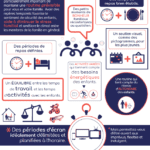
It is important to maintain a predictable routine for you and your family. Having time markers promotes children’s sense of security, helps reduce family stress and generally improves the climate between family members.



It is with great enthusiasm that the Boscoville team presents this activity guide, specially designed for a period of confinement. The guide is mainly aimed towards CISSS and CIUSSSS workers and contains 11 clinically focused, recreational activities for youth between the ages of 6 and 17 living in residential care centres. We are aware that the measures that have been put in place over the last few weeks have placed many youth and their families in a state of disequilibrium. This is also true for workers. Most of the usual daily activities have been suspended and this requires a rapid reorganization of the programming in those centres.
Although we cannot offer direct support on the floor, we want to help. The activities in this guide are ready to go, simple to lead, and it will help you share positive and unforgettable moments with your youth during this period.
It is with great enthusiasm that the Boscoville team presents this second volume of our activity guide, designed specifically for a period of confinement. The guide is mainly aimed towards CISSS and CIUSSSS workers and contains 11 clinically focused, recreational activities for youth between the ages of 6 and 17 living in residential care centres. We are aware that the measures that have been put in place over the last few weeks have placed many youth and their families in a state of disequilibrium. This is also true for workers. Most of the usual daily activities have been suspended and this requires a rapid reorganization of the programming in those centres.
Although we cannot offer direct support on the floor, we want to help. The activities in this guide are ready to go, simple to lead, and it will help you share positive and unforgettable moments with your youth during this period.
In April 2019, Boscoville initiated a working group with intervention professionals to translate key terms and concepts from the Psychoeducative Model of Intervention from French to English. The aim of this endeavour is to standardize English language terms of the model so that it can be consistently shared and taught in anglophone contexts. It is our hope that this foundational lexicon will provide a starting point for the development of more comprehensive training materials in the English language.
The law of effect is a central concept when addressing substance use and more specifically an “episode” of substance use. Sometimes, reducing substance use does not seem to be an option for a young individual. On one hand, we understand substance use involves risks for that individual, while we acknowledge that individual isn’t in a place to consider the risks nor is ready to change. We can only try to advise the young individual to adopt less risky behaviours for themselves and those around them whilst using substances. Once again, the harm reduction approach is key. Thanks to the law of effect, it will be easier for you to make them think about their consumption and help them identify less risky or more appropriate behaviours. It is a simple concept that can lead to positive and very effective results.
This drug addiction capsule will allow you to introduce this concept to the young people in your group or to anyone in your community. As a bonus, you’ll find a simple and useful activity to try with the young people in your group.
We often hear about the harm reduction approach in public health policies or in the news. In fact, the use of cannabis has been legalized in Canada to move more towards a harm reduction approach. Could we explain this approach to young people in our own words? This simple concept can sometimes cause headaches when we try to popularize, understand or apply it. Do we even understand what it is ourselves? Let’s try to remedy this situation.
This drug addiction capsule allows you to do so. As a bonus, discover an awareness activity for youths based on this approach. Explaining the harm reduction approach to young people is a starting point to empower them to adopt less risky and more cautious behaviours.
Child development highly depends on the sense of emotional, cognitive, and physical security that is developed through the relationship with caregivers. When children experience traumatic events of a relational nature committed by meaningful people, which are repeated and prolonged over time, they can hinder their development.
The complex trauma-informed approach allows us to better understand the effects of traumatic exposure on children’s development, such as living with a persistent sense of insecurity.
The continuum of clinical service delivery is based on:
The Risk-Need-Responsivity Intervention Model (RNR Model; Bonta and Andrews, 2017)
The key components of trauma-informed organizations (Dierkhising & Branson, 2016; Branson et al., 2017)
Social support and connectedness are vital keys to health and wellbeing. Current social distancing measures have deeply impacted how we connect and limited our normal ways of interacting. Without being able to see our family, friends, and community, we can feel extreme isolation, which can have a negative impact on our physical and mental health. This tool is intended to provide a visual representation of all the support and care (whether professional or informal) that is available to you and/or relationships you may need to cultivate at this moment.
It is with great enthusiasm that the Boscoville team presents this activity guide, specially designed for a period of confinement. The guide is mainly aimed towards CISSS and CIUSSSS workers and contains 10 clinically focused, recreational activities for youth between the ages of 6 and 17 living in residential care centres. We are aware that the measures that have been put in place over the last few weeks have placed many youth and their families in a state of disequilibrium. This is also true for workers. Most of the usual daily activities have been suspended and this requires a rapid reorganization of the programming in those centres.
Although we cannot offer direct support on the floor, we want to help. The activities in this guide are ready to go, simple to lead, and it will help you share positive and unforgettable moments with your youth during this period.
It is with great enthusiasm that the Boscoville team presents this second volume of our activity guide, designed specifically for a period of confinement. The guide is mainly aimed towards CISSS and CIUSSSS workers and contains 10 clinically focused, recreational activities for youth between the ages of 6 and 17 living in residential care centres. We are aware that the measures that have been put in place over the last few weeks have placed many youth and their families in a state of disequilibrium. This is also true for workers. Most of the usual daily activities have been suspended and this requires a rapid reorganization of the programming in those centres.
Although we cannot offer direct support on the floor, we want to help. The activities in this guide are ready to go, simple to lead, and it will help you share positive and unforgettable moments with your youth during this period.
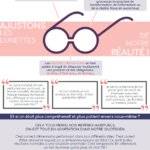
In these difficult times, it is normal to feel the need to vent with colleagues. Although this form of communication can offer some kind of positive support (improved quality of professional friendships, feeling close to the team), it can also exacerbate certain negative emotions that can lead to longer-term depressive symptoms. This is known as the “contamination effect”. Also, considering the pressure that the situation is exerting on social care professionals, some colleagues might feel destabilized by the context, hence the importance of paying particular attention to the content of our speech to remain positive and inspire hope.
Try this communication strategy to stimulate social support in a non-harmful way.
Support and social interactions are key elements to the health and well-being of each individual. Currently, social distancing guidelines have greatly changed the way we connect and interact with others. Since it is much more complicated to see our family, friends and other members of our community, we may feel extremely isolated, which can have negative consequences on our physical and mental health. The objective of this tool is to make a visual representation, informally or professionally, of the people in our social network with whom we might like to strengthen our ties.