



Based On
The SCP approach (Sugai and Horner, 2002; 2009) proposes an intervention framework developed from the Response to Intervention model, applied behaviour analysis and Bandura’s social learning theory.
SCP is a French version of the Positive Behavioural Interventions and Supports (PBIS) approach developed in the United States by Georges Sugai and Robert H. Horner (2002; 2009).

The Foundations of the Soutien au comportement positif (SCP) Program
The Soutien au comportement positif (SCP) approach proposes a range of evidence-based practices to identify and respond to the needs of students, including those with behavioral challenges or learning disabilities.
This intervention framework provides a continuum of support to promote the social, emotional and behavioural development of all students, including those with behavioural difficulties (CPBIS, 2023; Lewis et al., 2023; Horner and Sugai, 2000).
Objectives of the Soutien au comportement positif (SCP) Program
The SCP program proposes a systemic approach applied to the entire school, making it possible to organize the environment and make it more predictable, positive and coherent. The various SCP strategies are designed to:
- Foster a positive school climate
- Prevent and reduce behavioural difficulties
- Improve students’ academic performance
- Promote teachers’ sense of effectiveness
Promoting a Positive Learning Climate
A number of studies have demonstrated a link between behavioural difficulties and academic performance, both in younger children and in adolescents (Kulkarni et al., 2021).
Without adequate support, behavioural difficulties are associated with the more frequent use of punitive and exclusionary interventions such as expulsions or suspensions. In addition, they generate negative consequences for the excluded student (CBPIS, 2023).
Managing the behavioral difficulties of some students can affect teaching time and have a negative impact on the academic performance of other students in the class (Beaman et al., 2011; Roberts et al., 2012). In fact, managing problematic behaviors is one of the biggest challenges for teachers (Massé et al., 2015; Prior, 2014; State et al., 2011).
Soutien au comportement positif (SCP) offers an approach that aims to create a predictable, positive and consistent learning environment.
On one hand, universal SCP interventions are aimed at the socio-emotional development of all students.
On the other hand, these interventions offer strategies that both reduce the use of more punitive practices and maximize the time devoted to teaching students (Algozzine and Algozzine, 2007; Horner et al., 2009) in the school.
What You Get with the Soutien au comportement positif (SCP) Program
Take the Next Steps
Would you like more information or to find out more about the SCP program?
The Essentials for Implementing the Soutien au comportement positif (SCP) Program
- Obtaining management commitment: Management must ensure that the human, material and financial resources needed to implement universal interventions are available.
- Obtaining school personnel commitment: Following the presentation of the program, a minimum staff commitment rate of 80% is essential to implement the SCP project.
- Setting up a SCP committee in the school: The SCP committee develops and adapts the program’s interventions within their school, and supports its implementation.
The SCP Program in Numbers
Empirical Validity and Effectiveness
Empirical validity and effectiveness: SCP is based on more than 100 research studies conducted over 30 years in the United States, demonstrating its effectiveness and relevance (Lee and Gage, 2020; Mitchell et al., 2018; Horner et al., 2010; Horner et al., 2015).
An evaluation of the SCP program implemented in an elementary school in partnership with Boscoville revealed the following improvements (Goulet et al., 2022):
- An improved climate of justice and equity: A healthy educational climate characterized by positive relationships and mutual trust between all stakeholders
- Improved prosocial behaviour among students
- Reduced attentional difficulties at school and at home
Effects Associated with SCP Implementation
International studies demonstrate several positive effects of SCP in the school environment (CPBIS, 2023):
- Increased use of positive interaction strategies, increased self-control and decreased behaviour problems (Bradshaw et al., 2010; Bradshaw et al., 2012; Lee et al., 1999; Waasdorp et al., 2012)
- Decreased school suspensions (Bradshaw et al., 2010; Kim et al., 2018)
- Improved school performance (Horner et al., 2009; Kelm et al., 2014; Kim et al., 2018)
- Increased sense of teacher efficacy (Kelm and McIntosh, 2012; Ross et al., 2012)
The SCP Program Across Québec

335 Professionals Trained in 2023–2024
75 Members Supported in 2023–2024
7 Authorized Environments
Useful Links
Get the Latest About CSP!
The Behaviour Barometer
This software, developed by a partner, is an important ally for collecting and analyzing data, enabling you to obtain the behavioural history of your students in just a few clicks.
This tool enables rigorous follow-ups and increases the effectiveness and quality of interventions in the environments that use it.
SCP Infographic
This infographic provides a clear overview of the principles and benefits of the SCP program for students, teachers and the school as a whole.
Find Out More

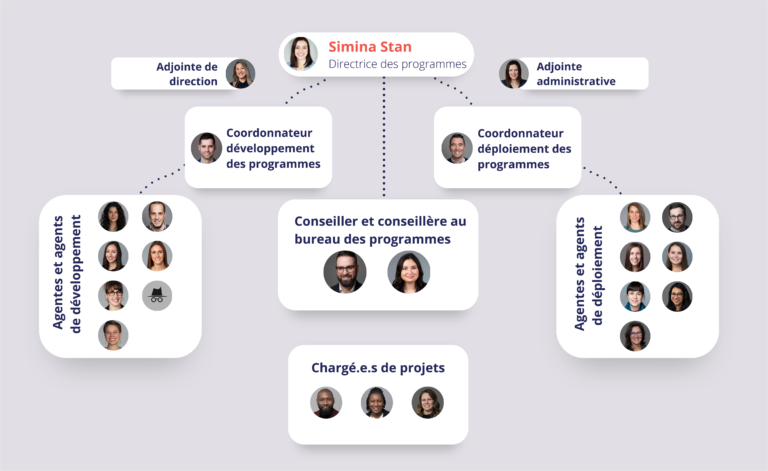

Researchers and Consultants

Mélissa Goulet, Ph. D., ps. ed
Professor, Department of Education and Specialized Training, Université du Québec à Montréal (UQAM).